HARAS SANTA RITA DA SERRA - BRASIL

HARAS SANTA RITA DA SERRA - BRASIL
HARAS SANTA RITA DA SERRA - CLIQUE NA FOTO PARA CONHECER NOSSO PROJETO

HARAS FIGUEIRA DO LAGO

HARAS FIGUEIRA DO LAGO
NEPAL GAVEA´S CHAMPION 2YO - HARAS FIGUEIRA DO LAGO - São Miguel, São Paulo

HARAS SANTA MARIA DE ARARAS

HARAS SANTA MARIA DE ARARAS
Santa Maria DE ARARAS: TOQUE NA FOTOGRAFIA E VENHA CONHECER O BERÇO DE CAMPEÕES

HARAS ESTRELA NOVA

HARAS ESTRELA NOVA
Venha nos conhecer melhor no Instagram @haras.estrelanova.

HARAS NIJU

HARAS NIJU
toque na foto para conhecer nosso projeto

HARAS FRONTEIRA

HARAS FRONTEIRA
HARAS Fronteira

HARAS ERALDO PALMERINI

HARAS ERALDO PALMERINI
HARAS ERALDO PALMERINI a casa de Lionel the Best (foto de Paula Bezerra Jr), Jet Lag, Estupenda de Mais, Hotaru, etc...

HARAS CIFRA

HARAS CIFRA
HARAS CIFRA - HALSTON POR MARILIA LEMOS

HARAS RIO IGUASSU

HARAS RIO IGUASSU
HARAS RIO IGUASSU A PROCURA DA VELOCIDADE CLÁSSICA - Foto de Karol Loureiro

HARAS SÃO PEDRO DO ALTO

HARAS SÃO PEDRO DO ALTO
HARAS SÃO PEDRO DO ALTO - Qualidade ao invés de Quantidade

HARAS RED RAFA

HARAS RED RAFA
HARAS RED RAFA - O CRIADOR DE PLANETARIO

STUD YELLOW RIVER

STUD YELLOW RIVER
STUD YELLOW RIVER - Criando para correr

JOCKEY CLUB BRASILEIRO

JOCKEY CLUB BRASILEIRO

segunda-feira, 25 de setembro de 2023

GANHADORES DE GRUPO NA IRLANDA


Köln: 61. Preis von Europa 2023 Siegerin: India


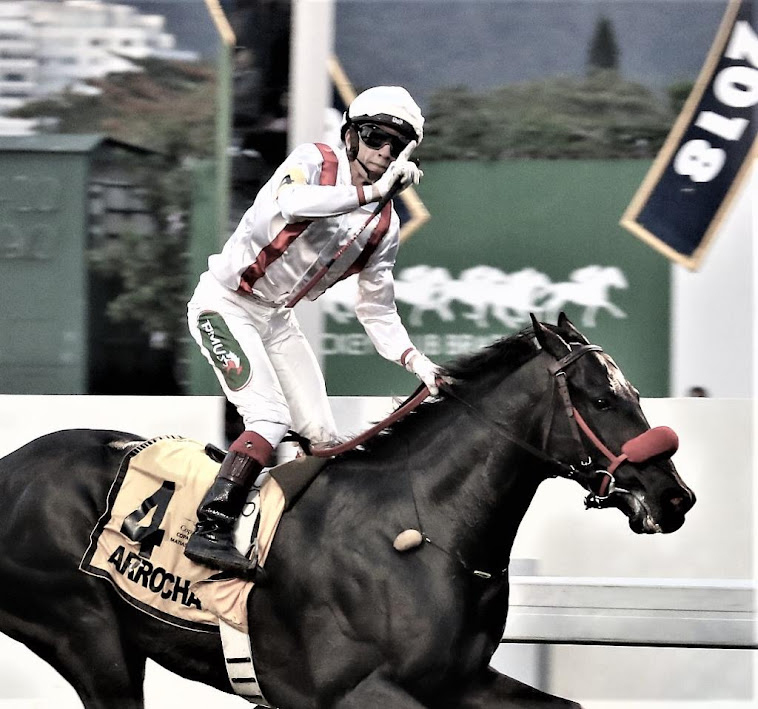
GANHADORES DE GRUPO EM HONG KONG


GANHADORES DE GRUPO NO JAPÃO


COLUNA DO PITTA LIMA


BOM DIA

Vivemos uma era de comunicações. Algumas verdadeiras, outras apenas narrativas, O problema passa a ser como separa-las. Ficção de realidade. Verdade de mentira. Você tem que ser hoje um expert, para decifrar, o que seja, do que nunca foi.

Nós do Ninho, seja da live ou do blog, tentamos levar a todos vocês, aquilo que acreditamos ser verdade. Uma boas, outras ruins, porém todas verdadeiras. Até este nosso bom dia, tenta refletir a realidade.  

Podemos ter observações que não cheguem a nossos ouvintes como certas, contudo são verdadeiras. Exatamente aquilo que pensamos. Temos um compromisso em analisar, não apenas em informar, pois, como já deixamos claro aqui, em diversas outras oportunidades, existem outros blogs com uma muito maior capacidade de angariar informações que o nosso. Porém, nos damos ao luxo de achar, que poucos com a capacidade de análise que temos.

Um bom dia para todos.

PONTO CEGO: SUPLANTAR A PERFEIÇÃO

A falta de atenção, inevitavelmente nos pega com as calças nas mãos. Outro dia, um navegante menos atento, expressou sua surpresa, de ver Tamara, aquela que parece ser a líder desta geração feminina, ganhar, - da forma que ganhou - e ser filha de Bolt d´Oro, um reprodutor ainda não convenientemente testado na excepcional Beholder. 

O que não deixa de ser, uma preocupação mais do que justa, quando ele pergunta: "não seria mais seguro cobrir uma égua deste padrão com algo já consagrado como Gun Runner, Tapit, Into Michiref, Curlin, ou outro deste estagio"?

Claro que sim, eliminando-se da lista, Into Mischief, que é um irmão materno seu, e que ocasionaria um incesto de proporções imprevisíveis, creio que qualquer outro consagrado, tenderá a ser sempre, uma solução mais segura, do que um a ser ainda experimentado.

Outrossim, lembrei-me imediatamente da teoria, exposta anos atrás, por um outro leitor que defendia na época, que éguas extraordinárias em pista, como no caso presente Beholder, deveriam ser cruzadas com reprodutores, que não propiciassem no pedigree do produto, imbreeds, pois, para este leitor, estes imbreeds, poderiam interferir, naquilo que era ansiado o produto ter: a classe de sua mãe.

Pensem bem, faz senso.

Se você acredita que com imbreeds potenciará o pedigree do produto em questão, automaticamente assume que ele está tentado erigir algo mais convincente do que a própria mãe. Que no caso aqui, me parece ser desnecessário, além de difícil de ser realizado, pois, como melhorar algo que aproximou-se tanto da perfeição?


NUNCA PERCA SEU SENSO DE HUMOR


SAUDADE NÃO TEM IDADE


EXTRA ! EXTRA !


ANATOMIA

Sir Cosmo

Sunreigh

Bahram


HORSE RACING LEGENDS


This is an original 1922 photo of Exterminator and Albert Johnson.

His mercurial owner thought so little of him that he dubbed him the goat. While he was called the Galloping Hatrack by much of the press, he was fondly known as Old Shang by his jockey and one time trainer Willie Knapp. But he was Old Bones to a racing public who loved the tall ungainly muddy chestnut as few horses on the American Turf have been loved.

Exterminator was bred by F.D. Knight and foaled at Almahurst Farm. His sire McGee was the only foal of the unraced White Knight a son of the 1892 English Derby winner Sir Hugo. It’s unclear why, but White Knight was immediately gelded after the birth of McGee.

His dam Fair Empress started twice with little success. But she was well bred being the daughter of the talented Jim Gore, himself a son of the mighty Hindoo. Her second dam was by the 1879 St. Leger winner Rayon d'Or, and her third dam was the full sister to Modesty, the first winner of the American Derby.

In spite of his pedigree, the awkward youngster was offered for sale at Saratoga in 1916. He was purchased by J. Cal Milam for fifteen hundred dollars. As fate would have it at the same sale, Exterminator crossed paths with his future owner and stablemate. A French bred colt by the name of Sunday was bid up to $5,000 before Willis Sharpe Kilmer was able to claim him.  Shortly thereafter, Kilmer changed his name to Sun Briar. 

In the spring of 1917, Exterminator’s health took a turn for the worse and he became so rundown that he was gelded and his racing start was delayed until June 30th of that year. He carried the Milam silks in only four starts at two winning half of them and earning a nomination to next year’s Derby. Meanwhile, Sun Briar set the racing world on fire topping the juvenile division with five wins in nine starts and becoming the early favorite for the 1918 Kentucky Derby.

Needing a work mate to prepare his beloved Sun Briar for the race, Kilmer authorized trainer, Henry McDaniel, to find a suitable runner. McDaniel had seen Exterminator turn in a very nice work at Churchill Downs and ten days before the Kentucky Derby he purchased Exterminator along with two fillies for $10,000.

Kilmer was less than pleased with the initial workout between the two horses. Further he had only authorized $700 for the purchase of any additional horse. The volatile Kilmer, who had made his fortune selling a home made elixir called Swamp Root, quickly dubbed Exterminator “that truck horse” and even less charitably “the goat.”

To his connections’ horror, Sun Briar broke down shortly before the Kentucky Derby and was subsequently scratched. McDaniel proposed running Exterminator in his stead. But Kilmer would have none of it declaring that the goat was unfit to carry his silks in such a prestigious race. Having seen some of Exterminator’s works, Col. Matt Winn, the proprietor of Churchill Downs finally persuaded Kilmer to enter the horse.

Exterminator was the longest shot on the board at 30 to 1 in the 1918 Kentucky Derby. That morning a heavy rain had fallen which left the track fetlock deep in mud. A less than enthusiastic Willie Knapp had the mount on Old Bones now that Sun Briar was scratched. After the start, Knapp kept Exterminator in fourth place until just after six furlongs where he slipped through on the rail. Dueling with front runner Escoba in the stretch, Old Bones pulled ahead by a length in the muddy going and claimed victory for his first start as a three year old.

He was not to win again in five more outings until October of 1918 where he won an allowance race at Laurel. He would then account for the Carrollton, Ellicott City and Pimlico Autumn Handicaps on his way to an unprecedented meeting of three Kentucky Derby winners in the Bowie Handicap. In the mile and 1/2 contest, the three Derby winners finished in numerical order as George Smith the 1916 winner was first, Omar Khayyam the 1917 victor claimed second and Exterminator came home in third. Old Bones closed out the year with a win in the 2 1/4 mile Latonia Cup.

In 1919 he started 21 times at 10 different tracks. Exterminator set or equaled three track records in winning nine races with victories in the Ben Ali, Camden, Havre de Grace Handicaps and the first of four straight wins in the prestigious Saratoga Cup and the first of three straight wins in the 2 1/4 mile Pimlico Cup.

1920 would see Old Bones as a five year old reeling off 10 victories in 17 starts. With Exterminator fit and running well, Kilmer pursued Sam Riddle demanding a match race. Riddle politely ignored the volatile Kilmer stating that Man o’ War and Exterminator might meet in the natural course of events.

This natural course of events that Riddle spoke of was starting to look like the August 31st Saratoga Cup. With both horses entered along with Triple Crown winner, Sir Barton, the Saratoga Cup was shaping up to be the race of the century.

Then the defections began. Man o’ War was the first to leave, shipping instead to Belmont for the Lawrence Realization against his own age group.

On the day before the race, the traditional late summer thunderstorms drenched the Saratoga race course. Refusing to face Exterminator on a surface at which he so excelled, Sir Barton scratched. Indeed, Hall of Fame trainer, Sam Hildreth once observed that Exterminator skimmed across the mud like a dragon fly on water. 

The only rival willing to take on Exterminator was W.R. Coe’s top filly Cleopatra. She proved no match for the old gelding as he took the lead shortly after the start and splashed home by six lengths setting a new American record for fourteen furlongs. Exterminator continued his winning ways in the two mile Autumn Gold Cup and the Toronto Autumn Cup.

Now the clamor for a match race among the three horses really began. While the owners agreed to the race’s venue at Kenilworth Park in Canada, the other terms were not as easily resolved. Still stinging from the mishaps in the Saratoga Cup, Kilmer demanded that the race be at a mile and 1/2 under handicap conditions instead of weight for age. 

Riddle agreed to the distance, but refused the handicap conditions insisting on the latter whereby both Exterminator and Sir Barton would give Man o’ War six pounds. Kilmer declared Old Bones from the Match Race, sending him instead to claim the 2 1/4 mile Ontario Jockey Club Cup. Exterminator closed out the season with another victory in the Pimlico Cup and was voted 1920 Champion Handicap Horse.

At six in 1921 and carrying onerous burdens ranging from 130 to 137, he won eight stakes races out of 16 starts with 2 seconds and 5 thirds. His most impressive win was the Toronto Autumn Cup toting 137 and giving between 20 to 31 pounds to his closest finishers. That year he shared 1921 Top Handicap honors with Mad Hatter.

In 1922 Exterminator was at the top of his game and enjoyed his most productive and lucrative year. Despite carrying an average of 133 and a high of 140, Old Bones won 10 out of 17 starts and earned $71,075. His best race was the 1922 Brooklyn Handicap where under 135, he outlasted champion Grey Lag while spotting him nine pounds. He was voted the 1922 Horse of the Year and shared top Handicap honors with Grey Lag.

But the Brooklyn finished him. While he raced for two more years, he won only 4 times in 10 starts. In 1924 Exterminator was retired after pulling up lame following a third place finish in the Queen’s Hotel Handicap in Canada. He would live until the age of 30 dying in 1945 at Sun Briar Court in New York where his constant companion was a Shetland pony named Peanuts. 

Old Bones made several public appearances during his retirement. In 1941 accompanied by Peanuts, he led the post parade for the Exterminator Handicap at Pimlico, whereby one turf writer opined that none of the horses running that day was fit to carry his blanket. In 1943 to bolster the war effort, Exterminator appeared to help sell War bonds at Belmont Park. He was a constant fixture at birthday parties with the neighborhood children at Sun Briar Court and would mope in his stall until the youngsters stopped by to see him after school.

Exterminator’s record stands at 100 starts with 50 wins 17 seconds 17 thirds with earnings of $252,996. He was 1920 Champion Handicap Horse; 1921 and 1922 Co-Champion Handicap Horse and 1922 Horse of the Year. He was inducted into the American Hall of Fame in 1957 and into the Canadian Hall of Fame in 2016. On the Blood Horse List of 100 Top American Racehorses, Exterminator is found at number 25.

In a long career that spanned eight years, he won from 5 1/2 furlongs to 2 1/4 miles at 26 different tracks in the US, Mexico and Canada. He carried 130 or more 31 times and even 140 in one race. He was an intelligent and generous horse whom starter Mars Cassidy considered his best assistant because not only would he wait patiently behind the barrier, but he would lean on a fractious horse keeping him still until the race began. Because of his owner’s tempestuous nature resulting in the farm’s revolving door for employees, Exterminator would be conditioned by no less than nine different trainers and ridden by 18 different jockeys in his long career.

Willie Knapp, who rode Exterminator in the 1918 Kentucky Derby and Upset to victory over Man o’ War, said of Old Bones: “When he was at his best, Exterminator could have beaten Man o’ War or Citation or Kelso or any other horse that ever lived on any track doing anything.” 

PAPO DE BOTEQUIM: O ARCO E A CRIAÇÃO NORTE-AMERICANA

Numa época que o turfe norte-americano respirava ainda Bold Ruler, Man O´War e outros detalhes locais, John Galbreath inovava, trazendo por leasing, ganhadores do Arco, como Ribot e Sea-Bird (foto de abertura) e atravessando o Atlantico para ganhar o Derby e acabar com a invencibilidade de Brigadier Gerard, com Roberto.

Escuto de muita gente o conceito que trazer Sea-Bird, para este lado do Atlântico, foi um tiro no pé. Eu continuo tendo minhas duvidas, no momento em que era considerado por muitos, - inclusive o Timeform - como o melhor cavalo do mundo de todos os tempos, e era nada mais, nada menos que um neto de Native Dancer.

Outrossim, na verdade, Sea-Bird, só teve 175 produtos registrados, e embora seu numero de stakes winners, 33, possa ser considerado bem acima da média, ninguém nos Estados Unidos, deu bola, quando ele voltou a sua nativa França, onde morreu ao ano seguinte de sua chegada. Seria o caso do cavalo errado, no lugar errado? Eu penso que se tratou de algo, bem mais complexo: no tempo errado.

Ribot havia ganho em 1954 e 1955 a prova máxima francesa e contava ainda com um King George. Sea-Bird, anos depois vencera em Longchamp ,em 1965, mas tinha a seu favor, o Derby. O primeiro invicto. O segundo com sete vitórias em oito apresentações, sendo segundo apenas na estréia, para um companheiro de barn. Cavalos de mesmo padrão. Mas enquanto um foi considerado sucesso na reprodução. Outro não.

Três anos depois, foi a vez do irlandês Vaguely Noble ganhar o Arco, e viria a ser o terceiro importante ganhador desta prova a servir nos Estados Unidos. E creio, que como Ribot, não decepcionou. sabem quantos anos levou para que os norte-americanos sediassem outro ganhador do Arco? Nove anos e o escolhido foi o norte-americano Alleged, este sim com um pedigree que todos reconheciam. Um Hoist the Flag, em mãe Prince John, em mãe Determine.

Alleged foi um bom reprodutor como Vaguely Noble, mas como ele, incapaz de fazer um filho, leading sire. Na década de 80, Sagace e Trempolino vieram a servir nos Estados Unidos, e mais uma vez os ganhadores do Arco, não caíram nas graças dos criadores norte-americanos. E desapareceram na poeira. E pasmem, de lá para cá, nenhum herói do Arco, desembarcou por aqui. E nós brasileiros, embarcamos na canoa furada de quatro deles, depois de fracassados em campos de muito mais elevado nível de criação, na Europa: Sinndar, Sagamix, Peintre Celebre e Trempolino. O que eles trouxeram de bom para a nossa criação? Custa-me crer que alguma coisa.

Agora me pergunto, se da metade dos anos 50, até os meados dos anos 20 deste novo século, o desempenho dos ganhadores do Arco, nos Estados Unidos, foi pífio, porque adotamos a politica de dar chances a vencedores do mesmo, com o agravante, de ainda por cima, de terem fracassado em haras de gabarito na Europa, sendo os Estados Unidos, o único país do hemisfério norte a se interessar pelo nosso PSI?

A verdade nua e crua, é que apenas Ribot conseguiu a manutenção da tribo que formou, entre aqueles que ganharam o Arco e ancoraram no Kentucky. Primeiro com Ribot-His Majesty-Pleasant Colony-Presently Perfect e outro com Ribot-Tom Rolfe-Hoit the Flag-Alleged. Terminando com uma Breeders Cup Classic e dois Arcos. Poder-se-ia se dizer o mesmo, dos outros filhos de Ribot? 

Rito

QUEM AVISA AMIGO É


Geralmente no turfe, quando se explica se complica. Situações óbvias não necessitam de maiores explicações. Ficam evidentes quando de suas simples menções. É o cado do Robson Garcia, nosso entrevistado de hoje a noite, também reconhecida como 25 de Setembro.

Se você quiser tomar conhecimento da brilhante história de um brasileiro, que se transferiu para a Irlanda, para galopar cavalos e que depois de sete anos em Ballydoyle, resolveu dar uma guinada em sua vida, transformando-se em pinhooker de tremendo sucesso, não perca a oportunidade de assistir. 

Com seu próprio dinheiro iniciou sua nova etapa, e hoje conta com um centro de treinamento próprio, com mais de uma centena de elementos preparados para as vendas de animais em treinamento e o mais importante de tudo, gozando de prestigio e do respeito que a credibilidade lhe trouxe, devido a seus constantes acertos.

Recentemente conseguiu um feito, que achava muito difícil de se conseguir. Ganhar uma prova de graduação máxima, no palco mais difícil de se conseguir: a Irlanda. Desta forma acredito ser válido, hoje se ligar na live do Ninho do Albatroz, no horário de sempre, as 21.30, na plataforma de Revista Horse, no You Tube e ouvir deste nativo das terras de Cabral, sua história, seus conceitos e seus sonhos.


AS 21.30 NA LIVE DO
NINHO DO ALBATROZ